 No contracts
 No startup fees

Honey bee removal Las Vegas homeowners request often starts with bees entering the same small opening. Ace Pest Control helps you understand what that activity means. We inspect the situation and explain options for a colony near your home, business, or outdoor gathering space.
Sheltered spaces and honey bee removal in Las Vegas
Honey bees live together in colonies. They collect nectar and pollen, and they use protected spaces for their comb. A cavity in a tree or building can offer shelter from the elements.
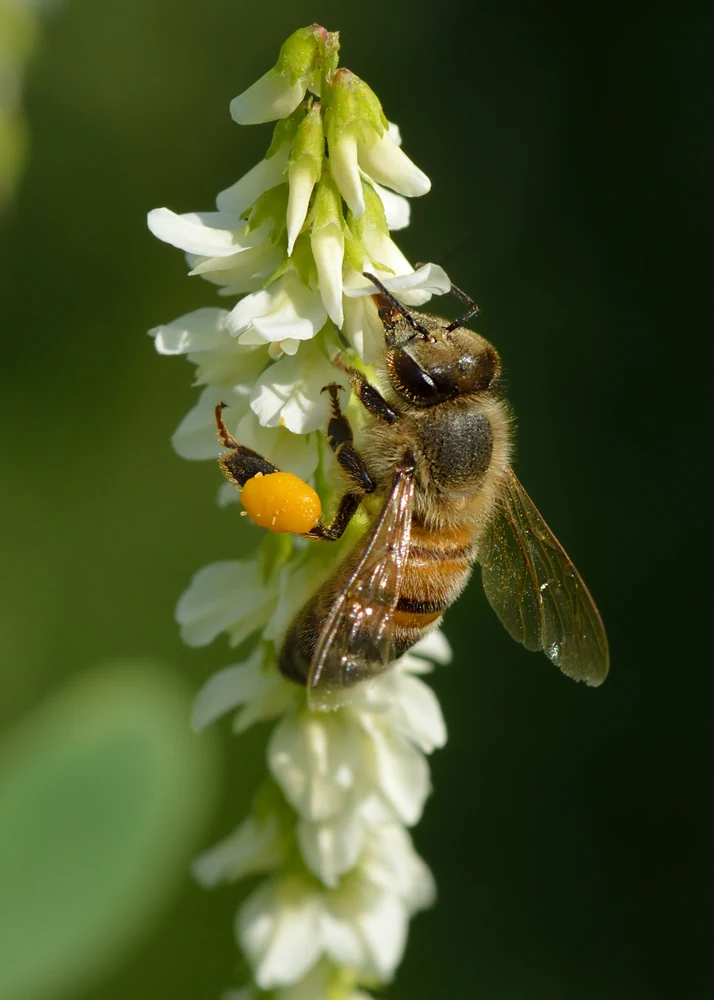
However, a bee on a flower is different from repeated traffic at a wall. Watch from a distance and note the pattern. This information helps separate ordinary foraging from a possible nesting site.
- Bees repeatedly using one opening
- A cluster resting in a sheltered location
- Activity around a roof edge or outbuilding
A careful assessment for honey bee removal in Las Vegas
First, we review where you see bees and how the space is used. Next, we look at the likely nesting site and available access. The location of a colony affects the service approach.
Your technician explains the proposed work and its scope. Ask about any comb, cavity, or repair concerns related to your property. That conversation helps you understand the full project before work starts.
Before your appointment
Keep people and pets clear of the activity. Also, avoid mowing, trimming, or moving stored items beside a suspected colony. Do not close an opening while bees actively use it.
Instead, tell us when the activity began and whether it has changed. Mention any recent work on the building. A simple record gives the technician useful context without disturbing the bees.
A colony and a passing visitor need different attention
Honey bees at flowers are carrying out ordinary foraging activity. An established colony uses a particular sheltered space and repeatedly travels to and from it. Therefore, where the bees go can be more informative than how many you notice in the garden.
Observe only from a safe location. Note whether traffic centers on one roof opening, wall gap, or tree cavity. Also, tell us whether the activity changes during the day. This helps the technician understand the situation before choosing where to inspect and what questions to ask.
Tell us about the structure around the bees
The material and position of a suspected nesting site affect access. A colony in an exposed location differs from one behind a wall surface. Existing construction, nearby utilities, and the condition of the building may all influence the discussion.
When you call, describe what you can see without opening anything. Mention whether the area is above a doorway or another busy space. Do not remove a cover to search for comb. Ace can assess the location and explain what access may be needed for the proposed work.
Make room for a careful assessment
Keep pets and unnecessary foot traffic away from the suspected colony. Also, pause work that creates vibration or disturbance close to the activity. Tell household members or property staff which area needs space so nobody approaches the bees unexpectedly.
If a regular entrance is affected, mention that before scheduling. You may need to use another route while the issue is reviewed. Ask the technician about any preparation for the appointment. The guidance should match the location and service, rather than a general assumption about all honey bee colonies.
Agreeing on the scope of honey bee removal in Las Vegas
Removing visible bees does not answer every question about a colony in a structure. Ask how the proposed work addresses the nesting location and any remaining comb. Also, clarify whether access or building repair forms part of the service.
Tell us if you have a preferred approach, such as asking about relocation possibilities. Feasibility depends on the colony and the site. A clear conversation lets you understand the available options before work begins. Keep the agreed scope and any follow up instructions with your other property maintenance records.
Review new sightings in context
After the service, watch the original location as instructed. Note whether new bees use the same opening or simply visit nearby plants. Those are different observations, and they help the technician decide whether another assessment is needed.
Do not close or alter an opening until the recommended stage of the project. Instead, ask when repairs can proceed and what to monitor afterward. Also, keep sheltered exterior areas accessible for routine observation. Early attention to a repeated flight path can make future concerns easier to describe and assess.
Frequently asked questions
Do you offer live bee relocation?
Contact Ace Pest Control to discuss the specific colony and available service options. The location and access can affect what is possible. We will explain the proposed approach before service.
Is a cluster of bees always a permanent hive?
No. A resting swarm and an established colony are different situations. However, a closer assessment may be needed to tell them apart. Keep your distance and let us review the activity.
Is a tree cavity relevant even if the bees stay outdoors?
Yes. The cavity may provide nesting shelter, and its position matters. A colony beside a busy path can raise different concerns from distant flower visitors. Describe the location and nearby activity so we can discuss an appropriate assessment.
Should I remove plants to stop honey bees visiting?
Flower visits alone do not establish a pest problem. Removing plants may not address a colony elsewhere. First, clarify whether bees are foraging or using a nesting site. We can help assess that distinction and discuss the property concern.
What records are useful after service?
Keep the service instructions and note any continuing activity at the original location. Include dates and whether insects enter the same opening. A photo taken from a safe distance can help, but a clear written description is also useful.
Related pest control resources
Request your free pest control estimate or explore the areas we serve. You can also view Ace Pest Control on BBB.